Corporate light jet
A corporate light jet carries four to seven passengers at about 430 knots. Hourly rates typically run from $3,800 to $5,800 in 2026. The cabin fits a small team and most regional trips.
- $3,800–$5,800per flight hour
- 4-7seats filled
- 1,400 nmnormal range
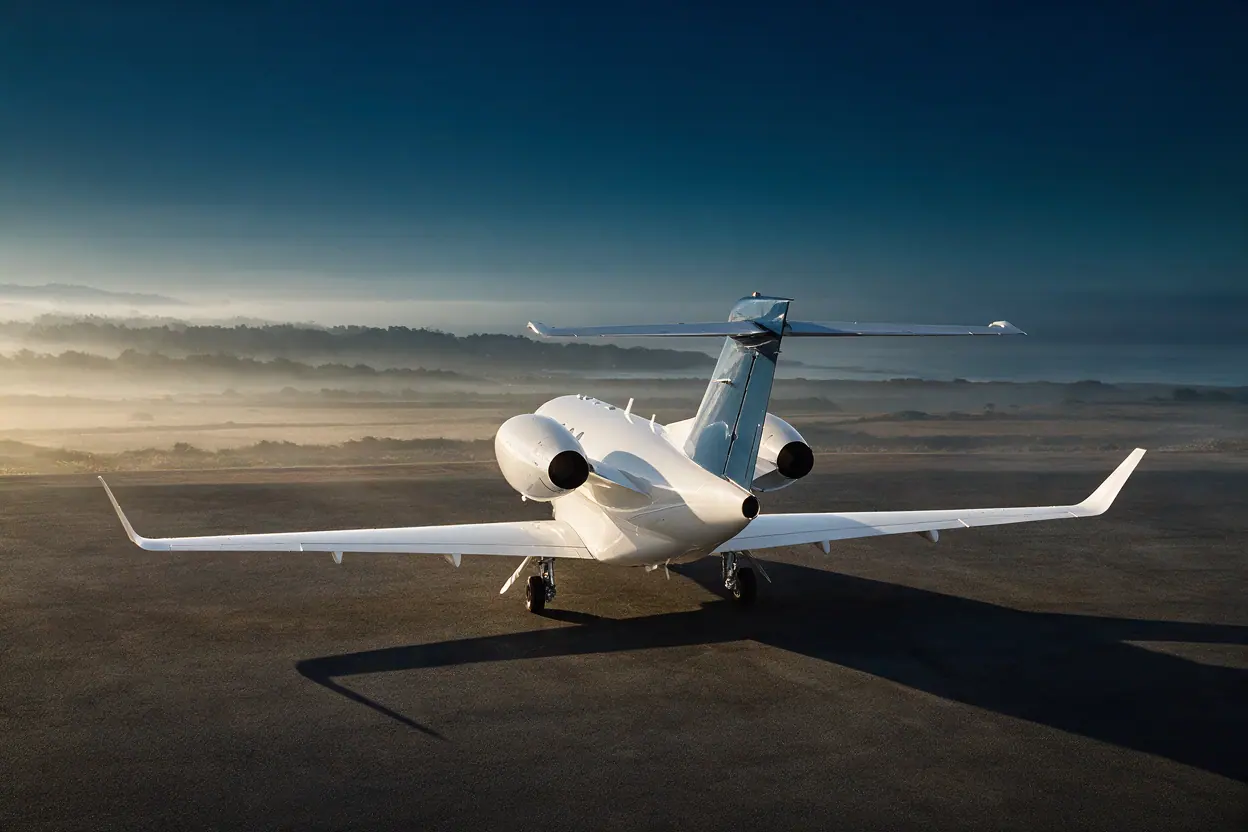
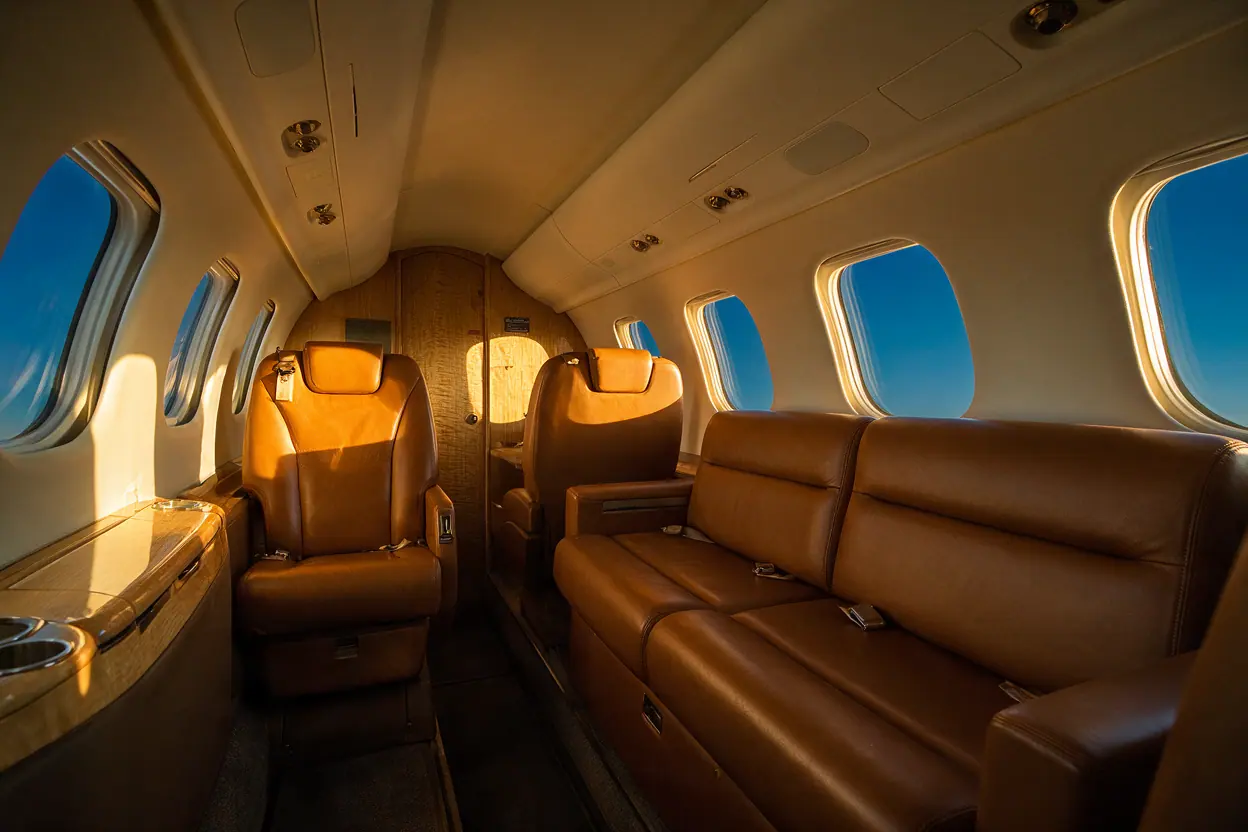
A corporate light jet is the entry point for companies that need to move small teams without airline schedules. With a typical range of 1,400 nautical miles and cruise speeds around 430 knots, these aircraft cover routes like New York to Miami nonstop in about 2 hours 37 minutes. Cabins are compact but workable for four to seven passengers, with enough baggage space for a few days of gear. Charter a corporate light jet for a team of four to seven and you get a private cabin where colleagues can work or rest without terminal interruptions. The trade-off is range: longer transcontinental legs may require a fuel stop, so plan on 6 hours 15 minutes for New York to Los Angeles.
The category includes the Cessna Citation CJ4 Gen2 and Embraer Phenom 300E, both with seven seats and ranges beyond 2,000 nautical miles. Hourly rates for these jets fall within the $3,800 to $5,800 band, depending on availability and positioning. When you book a light jet for regional business travel, the cost per passenger can compare favorably with refundable airline fares, especially when same-day travel is necessary. For companies that fly the same routes regularly, the efficiency of a light jet often outweighs the higher headline rate. A corporate light jet keeps the team together and on schedule for meetings that cannot slip.
Cessna Citation CJ4 Gen2
- 7 pax
- 451 kt speed
- 2,165 nm legs
- 71 cu ft luggage
- 410 held on US registry
The Citation CJ4 Gen2 carries up to seven passengers with a 4-foot-9-inch cabin height and 71 cubic feet of baggage space. Its range of 2,165 nautical miles and cruise speed of 451 knots make it one of the faster light jets. For a team of five, the cabin is comfortable for flights up to three hours. The CJ4 Gen2 is a strong choice for regional business routes because it can use shorter runways than many midsize jets, giving access to more airports.
Embraer Phenom 300E
- 7 pax
- 464 kt speed
- 2,010 nm legs
- 84 cu ft luggage
- 660 held on US registry
The Embraer Phenom 300E offers a 4-foot-11-inch cabin and 84 cubic feet of baggage, with seven passenger seats. Its range of 2,010 nautical miles and cruise speed of 464 knots make it the fastest in the light jet class. The cabin is slightly wider than some competitors, which helps on longer legs. The Phenom 300E suits companies that need speed and baggage capacity for trips of four to five hours with a small team.
When a corporate light jet makes sense
- A team of four to seven needs a same-day return and airline schedules would eat the working day. A light jet can depart at 8 a.m. and have the team back by dinner.
- The route is under 1,400 nautical miles, so no fuel stop is needed. Examples include New York to Miami (949 nm) or Chicago to New York (619 nm).
- You need to reach a city without nonstop airline service, such as a manufacturing plant in a secondary market. A light jet opens smaller airports closer to the job site and saves ground time.
- Confidential work requires a private cabin. When the discussion cannot happen in a public terminal, a light jet provides a secure space from gate to gate.
Limits of light jet travel
Light jets have a typical range of 1,400 nautical miles, so routes beyond that may require a fuel stop. For example, New York to Los Angeles is 2,129 nautical miles and takes 6 hours 15 minutes with a stop. If your trip is longer than 1,400 nautical miles, then a midsize jet may be more efficient. Also, cabin height is around 4 feet 9 inches to 4 feet 11 inches, so taller passengers should consider a larger aircraft for flights over three hours.
Light jet rates on common legs
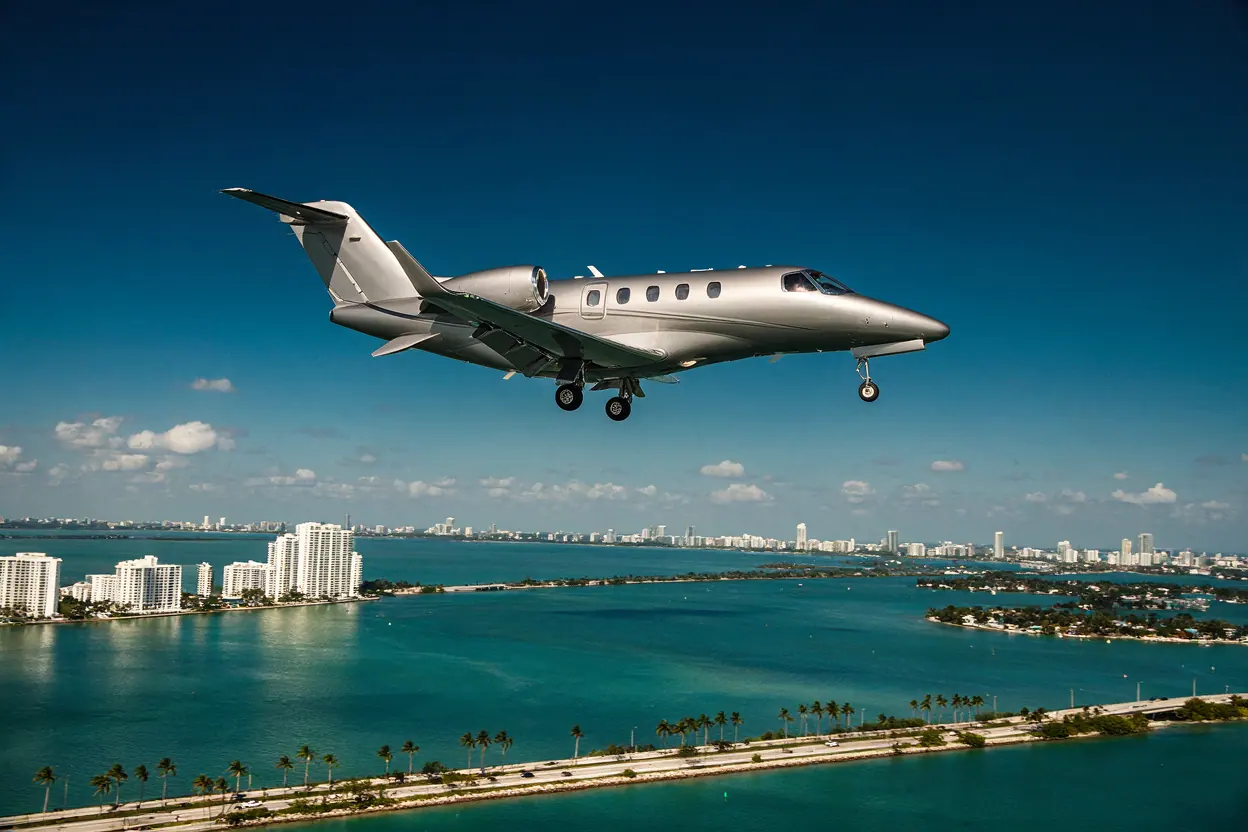
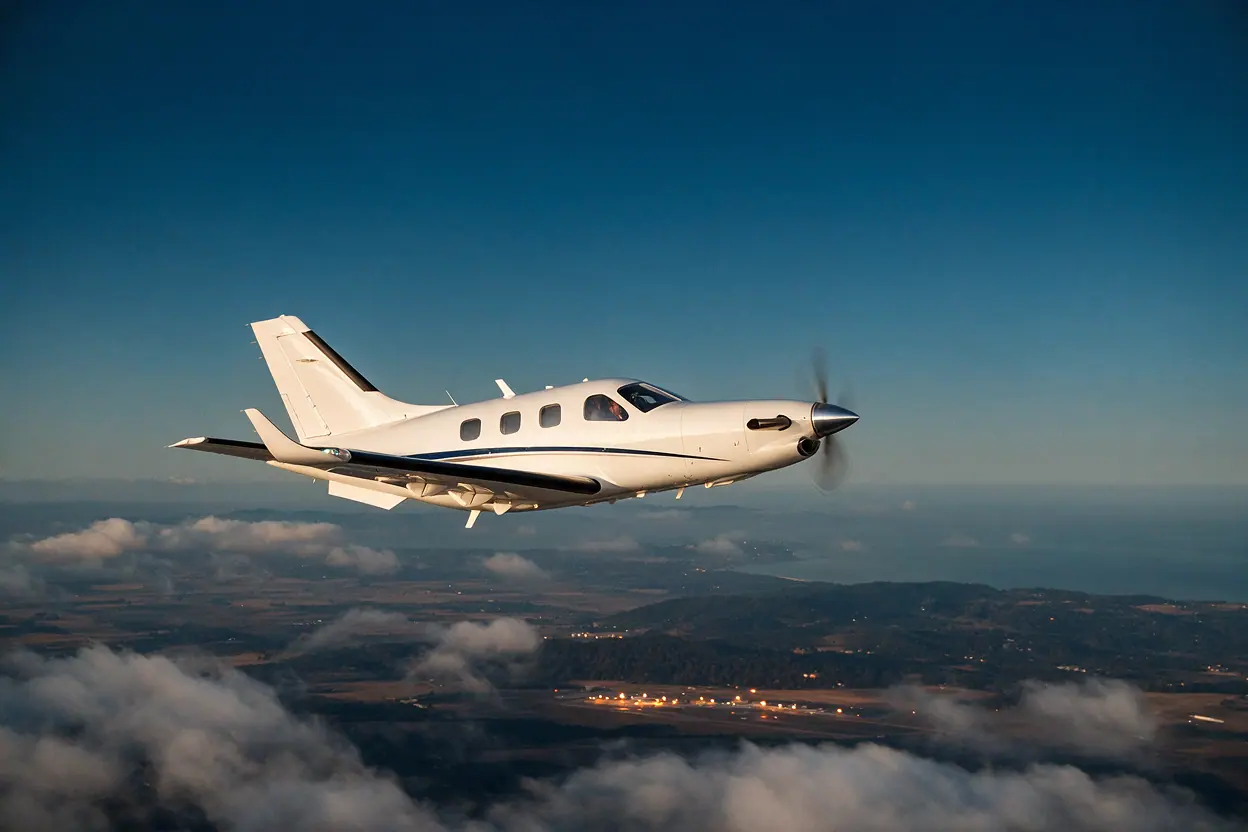
Light jets handle short and medium business routes efficiently. Los Angeles to Las Vegas takes 47 minutes, while New York to Miami covers 949 nautical miles in 2 hours 37 minutes. For longer transcontinental trips, a fuel stop may be needed, as on New York to Los Angeles with a 6-hour-15-minute total time.
Route charter times and Light jet costs
A light jet covers these 28 routes in 0h 30m to 6h 28m, with one-way estimates starting at $4,000 up to $37,500.
| Leg | Dur. | Single-leg est. |
|---|---|---|
| New York → Miami | 2h 37m | $10,000–$15,000 |
| New York → Los Angeles | 6h 15mplus a stop | $23,500–$36,000 |
| Los Angeles → Las Vegas | 0h 47m | $4,000–$6,000 |
| New York → Palm Beach | 2h 30m | $9,500–$14,500 |
| Los Angeles → San Francisco | 0h 59m | $4,000–$6,000 |
| New York → The Hamptons | 0h 30m | $4,000–$6,000 |
| Chicago → New York | 1h 49m | $7,000–$10,500 |
| Dallas → Houston | 0h 48m | $4,000–$6,000 |
| Miami → Nassau | 0h 42m | $4,000–$6,000 |
| New York → Boston | 0h 41m | $4,000–$6,000 |
| Washington, DC → New York | 0h 46m | $4,000–$6,000 |
| Los Angeles → Cabo San Lucas | 2h 16m | $8,500–$13,000 |
| Dallas → Las Vegas | 2h 34m | $9,500–$15,000 |
| Chicago → Miami | 2h 48m | $10,500–$16,000 |
| Atlanta → New York | 1h 52m | $7,000–$11,000 |
| New York → Las Vegas | 5h 46mplus a stop | $22,000–$33,500 |
| San Francisco → Las Vegas | 1h 11m | $4,500–$7,000 |
| Denver → Aspen | 0h 32m | $4,000–$6,000 |
| Houston → New York | 4h 04mplus a stop | $15,500–$23,500 |
| Dallas → New York | 3h 57mplus a stop | $15,000–$23,000 |
| Los Angeles → Honolulu | 6h 28mplus a stop | $24,500–$37,500 |
| Seattle → Los Angeles | 2h 18m | $8,500–$13,500 |
| Phoenix → Los Angeles | 1h 05m | $4,000–$6,500 |
| Boston → Palm Beach | 2h 51m | $11,000–$16,500 |
| Miami → Turks and Caicos | 1h 32m | $6,000–$9,000 |
| New York → Nantucket | 0h 45m | $4,000–$6,000 |
| Dallas → Aspen | 1h 49m | $7,000–$10,500 |
| Los Angeles → Jackson Hole | 1h 56m | $7,500–$11,000 |
Good to know
How much does a corporate light jet charter cost?
A corporate light jet charter costs between $3,800 and $5,800 per hour in 2026, depending on aircraft and availability. For a typical business trip like New York to Miami, expect $10,000 to $15,000 for the flight. These are estimates and can vary with positioning and fuel costs. When comparing quotes, ask the broker to break out hourly rate, positioning fees, and any overnight charges so you see the true trip cost.
How many passengers can a corporate light jet carry?
A corporate light jet typically carries four to seven passengers. The Cessna Citation CJ4 Gen2 and Embraer Phenom 300E both seat seven. Cabin size is compact, so for groups larger than five, consider a midsize jet for more comfort on longer flights. If your team includes bulky luggage or equipment, plan for less than full seating to keep the cabin workable.
What is the range of a corporate light jet?
A corporate light jet has a typical range of 1,400 nautical miles, but some models like the CJ4 Gen2 can fly up to 2,165 nautical miles. That means routes like New York to Miami (949 nm) are nonstop, while New York to Los Angeles (2,129 nm) may require a fuel stop. When planning a trip near the range limit, a fuel stop can add an hour or more, so check total time with the broker.
How fast does a corporate light jet fly?
A corporate light jet cruises at around 430 knots, with models like the Phenom 300E reaching 464 knots. That translates to a 47-minute flight from Los Angeles to Las Vegas or 2 hours 37 minutes from New York to Miami. If your schedule is tight, ask for the specific aircraft model's cruise speed, since faster jets can save time on longer routes.
Can a corporate light jet fly coast to coast?
Some light jets can fly coast to coast, but many require a fuel stop. New York to Los Angeles is 2,129 nautical miles and takes 6 hours 15 minutes with a stop in a light jet. For nonstop transcontinental flights, a midsize or super-midsize jet is usually better. If you need to cross the country without stopping, plan for a larger cabin class.
How do I book a corporate light jet for my company?
To book a corporate light jet, provide your route, passenger count, and timing to a charter broker. They will compare available aircraft and provide quotes. Rates range from $3,800 to $5,800 per hour, and you should confirm the total cost including any positioning fees. When comparing quotes, ask about the operator's certificate and insurance, and confirm what happens if the aircraft is unavailable on the day.