Corporate Jet Denver to Aspen
Denver to Aspen is a 110‑mile hop that takes longer to drive than to fly. A turboprop covers the 96 nautical miles in 38 minutes nonstop, with one‑way estimates from $2,200 to $3,500. For teams comparing door‑to‑door time against I‑70, the math is simple.
- 96 nm110 sm
- 0h 38mturboprop duration
- $2,200–$3,500one-way quote
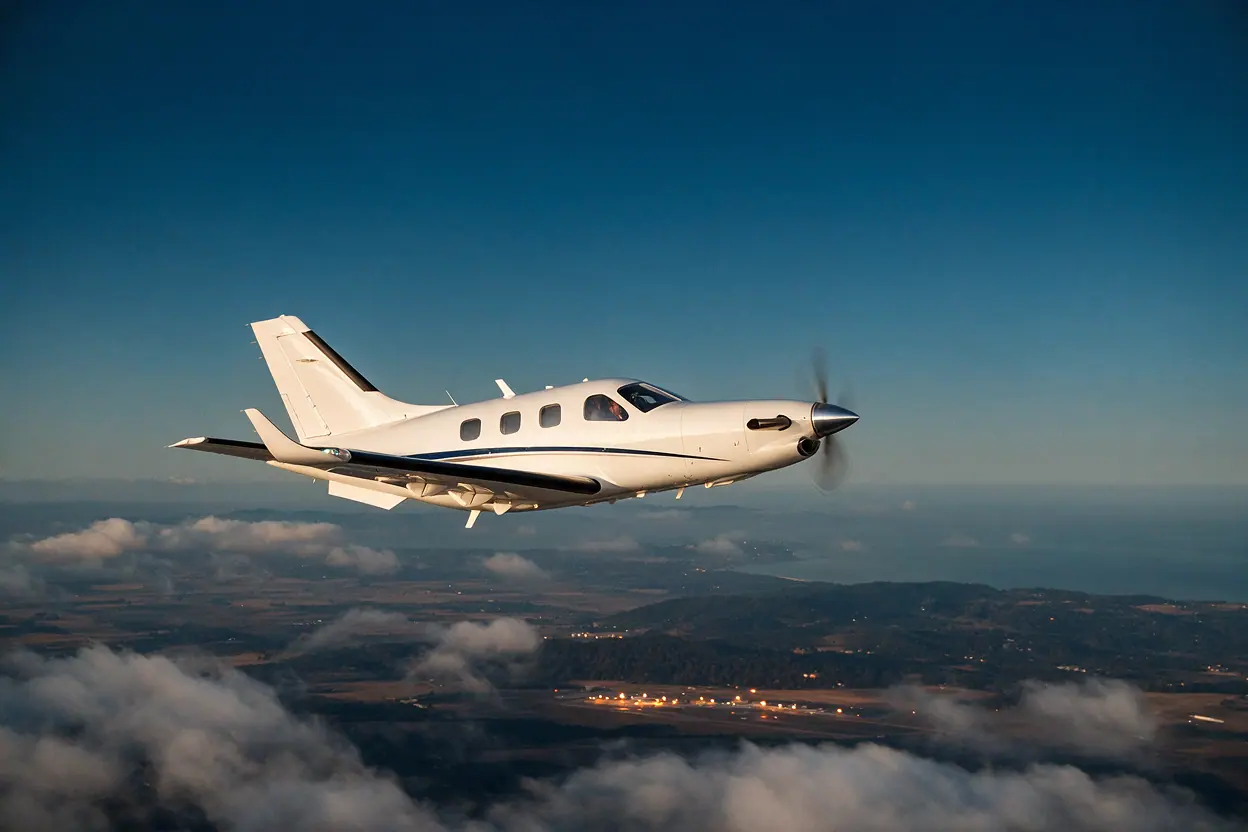
Aircraft pricing for Denver to Aspen private jet
A private jet from Denver to Aspen flies 96 nautical miles in 0h 38m on a turboprop, quoted at $2,200–$3,500 one way.Five aircraft classes cover this 96-nautical-mile route nonstop, all within roughly 31 to 38 minutes of flight time. The table below shows typical one-way estimates for each class, but charter pricing is dynamic: actual quotes vary with aircraft availability, crew positioning, and whether you need a return leg. Use these figures as a planning baseline, not a fixed rate.
| Jet category | En route time | Single-leg est. | Detail |
|---|---|---|---|
| Turboprop | 0h 38m | $2,200–$3,500 | Preferred match |
| Light jet | 0h 32m | $4,000–$6,000 | Nonstop |
| Midsize jet | 0h 32m | $5,200–$8,000 | Nonstop |
| Super-midsize jet | 0h 31m | $7,200–$10,000 | Nonstop |
| Heavy jet | 0h 31m | $9,500–$14,500 | Nonstop |
Priced per aircraft, not per passenger, excluding federal excise tax and segment fees. Block time covers taxi, climb, and descent.
Airline ticket costs vs charter, Denver–Aspen
Airline prices are the lowest fares Google Flights displayed for one passenger on Dec 9, 2026 (checked Nov 15, 2026); the charter row is our estimate for the entire aircraft. For 8 passengers, first class airline seat tickets total about $3,552, compared with $2,200–$3,500 for the whole turboprop.
| Way to fly | Operator | Dur. | Single-leg est. | Per seat |
|---|---|---|---|---|
| Coach on the airlines | United · nonstop | 1h 02m | $344 | $344 |
| First class airline seat | United · nonstop | 1h 02m | $444 | $444 |
| Turboprop | Full plane, seating as many as 8 | 0h 38m | $2,200–$3,500 | $280–$440 |
Airline ticket prices shift daily and cover no bags past the fare allowance; the per-seat charter number assumes every seat is occupied.
How a turboprop suits this mission
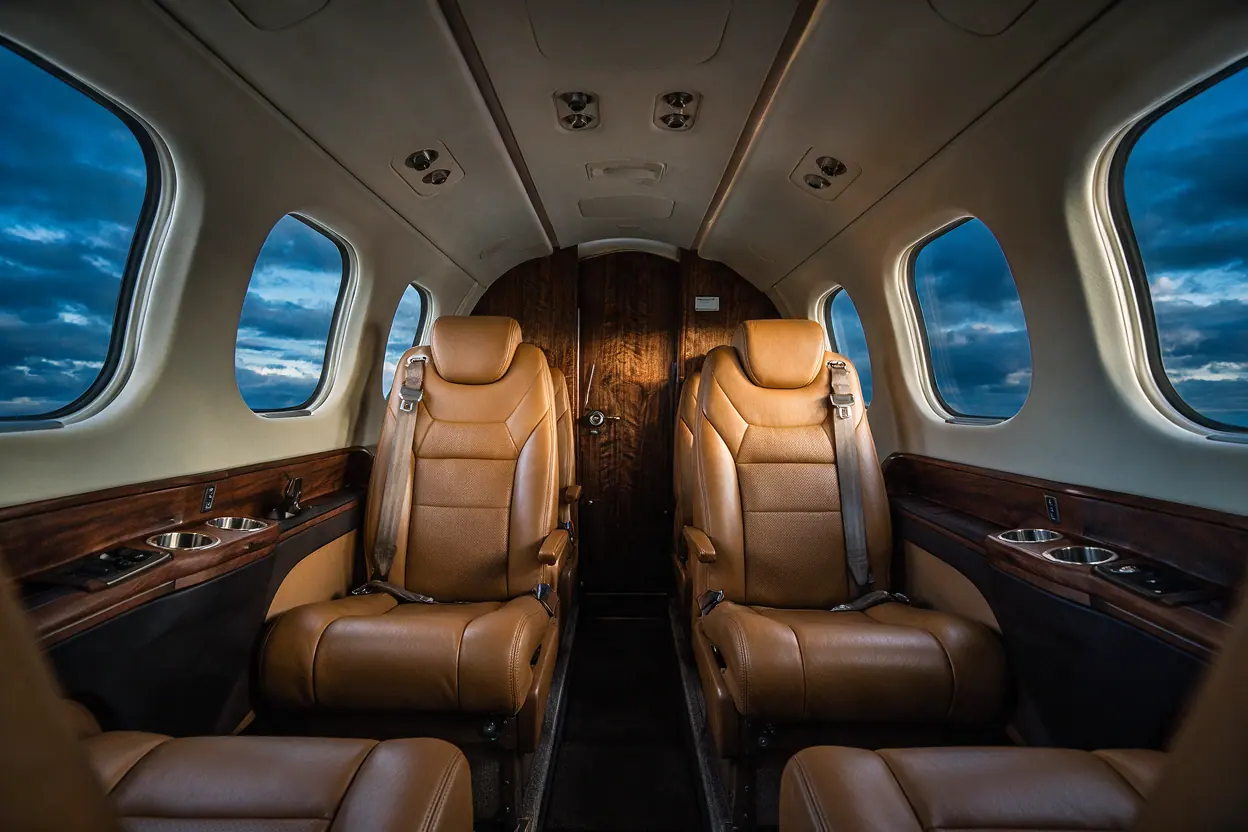
A turboprop is the practical choice for a 96-nautical-mile leg because it lands comfortably at Aspen-Pitkin County Airport's 8,006-foot runway and keeps one-way estimates low. The Daher TBM 960 carries up to six passengers at 330 knots, while the King Air 350i carries up to eight with 55 cubic feet of baggage. For a team flying corporate jet Denver to Aspen, the turboprop delivers the shortest door-to-door time on this distance.
Light and midsize jets also fly this route nonstop, but they cost more without saving meaningful time: both classes show 32-minute flight times, and the super-midsize and heavy jets trim only a minute. At 110 miles, the extra cabin volume of a midsize rarely offsets the price jump. If your group is larger than eight or carrying bulky gear, a midsize jet becomes the sensible step up. Otherwise, the turboprop does the job with the smallest fuel bill.
Daher TBM 960
- 6 pax
- 330 kt speed
- 1,730 nm legs
Cabin size 4 ft tall, 13 ft 3 in long. Bags 32 cu ft.
Beechcraft King Air 350i
- 8 pax
- 312 kt speed
- 1,800 nm legs
Cabin size 4 ft 9 in tall, 16 ft 8 in long. Bags 55 cu ft.
When to book and when prices peak
Demand on the Denver to Aspen route peaks around major holidays and ski-season weekends, when Aspen-bound aircraft and crews are in short supply. Summer festival season and fall foliage also tighten availability. On a 96-nautical-mile leg, the aircraft is not the constraint—positioning and Aspen ramp space are. If your travel dates land on a peak weekend, expect higher estimates and fewer tail options.
Booking earlier gives you more choice of aircraft and timing, especially for round-trip itineraries. For a same-day corporate jet Denver to Aspen return, the operator has to hold the aircraft in Aspen or reposition it, which affects the price. If your schedule is fixed, locking in a turboprop and a return slot well before the trip is the most reliable path. Last-minute bookings on peak dates can mean taking a larger, pricier class simply because that is what is available.

Leaving Denver
Charter flights from the Denver side typically depart Centennial Airport (KAPA), which has a 10,001-foot runway and sits closer to the southern business corridor than Denver International. Denver International (KDEN) works too, with a 16,000-foot runway, but you will deal with commercial-terminal TSA screening rather than driving straight to a private hangar. For a corporate jet Denver to Aspen trip, most teams choose KAPA for the faster curb-to-cabin flow.
Ground time at Centennial is usually shorter than at a commercial airport, and your crew can load bags directly. If your team is coming from downtown or the Tech Center, KAPA is often 20 to 30 minutes closer by car. That matters when you are trying to make a morning meeting in Aspen.
Arriving in Aspen
Aspen-Pitkin County Airport (ASE) is the only jet-capable field serving the Roaring Fork Valley, with an 8,006-foot runway. That elevation costs aircraft performance: on warm summer afternoons, density altitude can reduce allowable payload, so operators sometimes plan an early departure or a fuel stop on the return leg. The airport sits about four miles from downtown Aspen, a short drive to the lodges and conference venues.
ASE has one runway and limited ramp space, so slot times and parking can shape your quote. If you are flying corporate jet Denver to Aspen in winter, de-icing and mountain weather can add delay on either end.
| Field | ID | Rwy |
|---|---|---|
| Aspen-Pitkin County Airport (Sardy Field) | KASE / ASE | 8,006 ft |
| Centennial Airport | KAPA / APA | 10,001 ft |
| Denver International Airport | KDEN / DEN | 16,000 ft |
Comparable private jet routes for Denver – Aspen
These 6 private jet routes cover 82 to 199 nautical miles, with one-way turboprop estimates ranging $2,200 to $3,500.
This route’s FAQs
How long is the flight from Denver to Aspen on a corporate jet?
A turboprop covers the 96 nautical miles in 38 minutes nonstop, while light, midsize, and larger jets show 31 to 32 minutes. The difference is small because the route is so short. Door‑to‑door, the charter flight replaces a drive of several hours on I‑70, and the longest part of the trip is usually ground handling at each end.
What does a corporate jet Denver to Aspen cost?
One‑way estimates for a turboprop run from $2,200 to $3,500. Light jets range from $4,000 to $6,000, midsize from $5,200 to $8,000, super‑midsize from $7,200 to $10,000, and heavy jets from $9,500 to $14,500. These are planning figures, not quotes; actual pricing depends on availability, crew positioning, and whether you need a return leg.
Which airport should I use in Aspen?
Aspen‑Pitkin County Airport (ASE) is the only jet‑capable airport serving Aspen, with an 8,006‑foot runway. Its high elevation and single runway can limit payload on warm days.
Can I fly same‑day round trip from Denver to Aspen?
Yes. The 38‑minute flight time makes a day trip practical, but the aircraft must either wait in Aspen or reposition for the return. That waiting time is built into the quote. On peak weekends, same‑day returns are harder to secure because Aspen ramp space and aircraft availability tighten. Booking the round trip together usually produces a better price than two one‑ways.
What aircraft fly this route?
The turboprop class includes the Daher TBM 960, carrying up to six passengers at 330 knots, and the Beechcraft King Air 350i, carrying up to eight with 55 cubic feet of baggage. Light and midsize jets also serve the route. For a 96‑nautical‑mile leg, the turboprop is usually the most efficient choice.
Is there a baggage limit in Aspen?
Payload is the limiting factor, not just baggage space. At 8,006 feet elevation, warm‑day density altitude can reduce how much a given aircraft can carry. The King Air 350i offers 55 cubic feet of baggage, while the TBM 960 has 32 cubic feet. If your team travels with heavy gear, mention it when requesting quotes so the operator can plan fuel and payload.